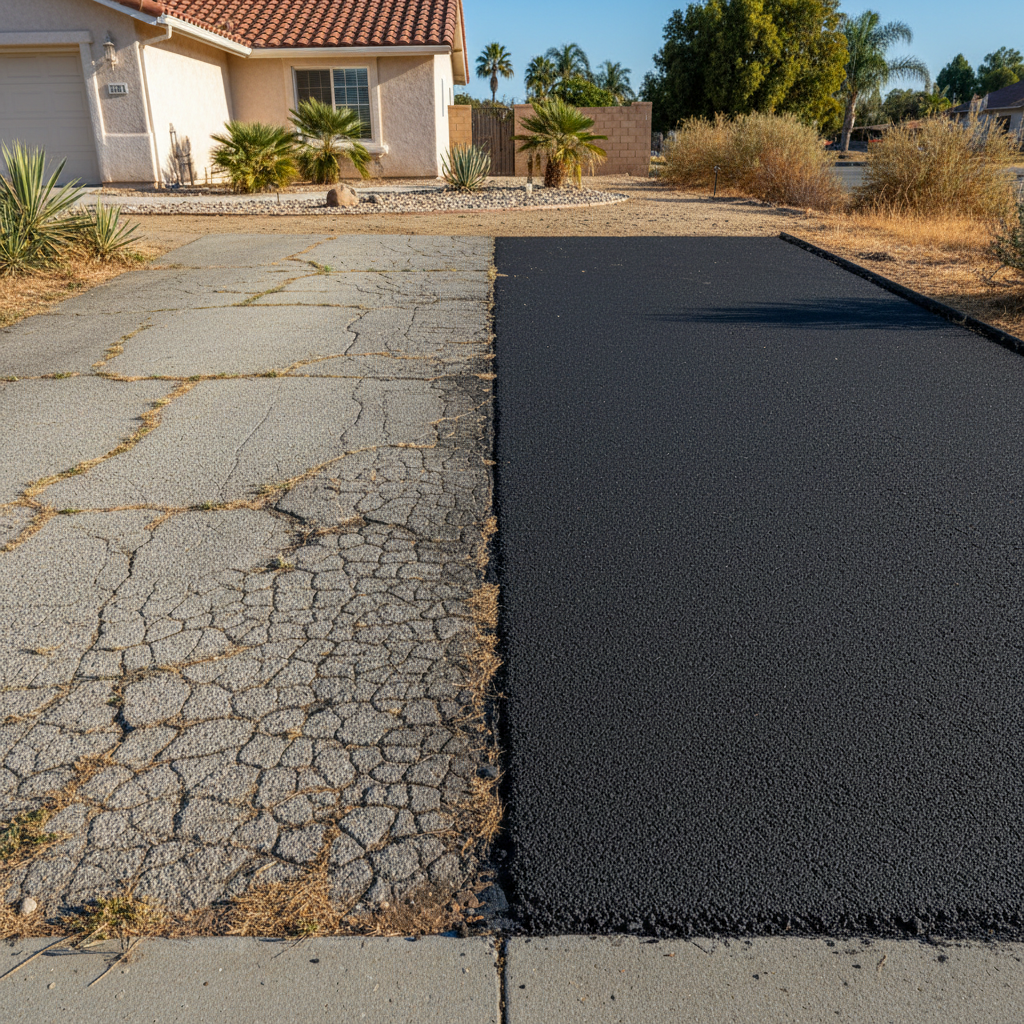
So, you've got an asphalt surface that's seen better days, right? Maybe it’s a long driveway, a shared private road, or even a big parking area right here in Colton. You’re probably wondering if you should just slap a new layer on top, or rip it all out and start fresh. That’s a super common question, and honestly, there isn't one "right" answer for everyone. But I can tell you what I’ve seen work best for folks around here over the years.
Asphalt Overlay: The 'New Skin' Approach
An asphalt overlay, sometimes called 'resurfacing,' is basically putting a fresh layer of asphalt right over your existing pavement. Think of it like putting a new coat of paint on an old wall – if the wall underneath is solid, it can look great and last a good while. We’re usually talking about adding 1.5 to 2 inches of new asphalt here.
The Good Stuff About Overlays:
- Cost: This is usually the big one for most people. Overlays are almost always cheaper than a full replacement. You save on demolition, hauling away old material, and you need less new material overall.
- Speed: It's a quicker job. Less digging means less time on your property, which is always a plus, wouldn't you agree?
- Appearance: A fresh, smooth, black surface instantly makes things look better. It covers up all those cracks and patches that have been bugging you.
The Catch with Overlays:
- Depends on the Base: This is crucial. If your existing asphalt has deep, structural cracks, potholes, or drainage problems, an overlay is just a band-aid. Those issues will telegraph right back through the new layer eventually. We've seen this happen a lot with older driveways in areas like the hills near the 215, where the original base might not have been properly compacted or the soil underneath has shifted over time.
- Lifespan: While it extends your pavement’s life, it won't last as long as a brand-new, full-depth job. You might get another 7-15 years if the base is good.
- Elevation Changes: Adding a new layer raises the surface. This can sometimes create issues with drainage, curbs, or transitions to concrete sidewalks or garage floors. We always check this carefully, of course.
Full-Depth Paving: The 'Start Fresh' Approach
Full-depth paving means we’re tearing out all the old asphalt, right down to the dirt. Then we compact the subgrade, lay down a fresh aggregate base, and finally, put down new asphalt. It’s a complete rebuild from the ground up.
Why Go Full-Depth?
- Durability and Lifespan: This is the gold standard for longevity. When done right, with a properly prepared base, you're looking at 20-30 years or more. You're building a brand-new, strong structure.
- Structural Integrity: You fix any underlying problems with the base or subgrade. If you've got soft spots, drainage issues, or significant cracking, this is the way to truly solve them.
- Better Drainage: We can re-establish proper slopes and grades. This ensures water sheds off effectively, which is vital for pavement health, especially with our occasional heavy rains.
The Downsides of Full-Depth:
- Cost: No getting around it, this is more expensive. You pay for demolition, hauling, more materials, and more labor.
- Time: It takes longer. More steps are involved, and the site will be a construction zone for a longer period.
- Disruption: More equipment, more noise, and a longer period where the area might be inaccessible.
My Recommendation for Colton Homeowners
Here’s the deal: if your existing asphalt is generally in fair shape – maybe some minor cracking, fading, or shallow potholes – and the underlying base feels solid, an overlay can be a great, cost-effective solution. It’ll give you a beautiful surface and several more years of life without breaking the bank.
However, if you're seeing widespread alligator cracking (it looks like alligator skin, you know?), significant potholes, standing water, or sections that are sinking or heaving, then an overlay is just delaying the inevitable. You need full-depth paving. Trying to save money with an overlay on a failing base is like putting a fancy roof on a house with a crumbling foundation – it just won't hold up, and you’ll end up paying more in the long run.
For us in Colton, with our diverse soil types and the wear and tear from our hot summers and occasional heavy downpours, a strong, well-compacted base is absolutely critical for any asphalt surface. That’s why All Star Asphalt Inc. always emphasizes proper preparation, no matter which route you go.
The best way to figure out what’s right for your specific situation is to have an experienced pro take a look. We can assess the condition of your existing pavement, check the drainage, and give you an honest recommendation based on what we see. Don't guess; let's get it right the first time.